Blockhead Odyssey • Biome Field Guide
Into the Mangroves
A tangle of roots, a chorus of frogs, and a whole new palette to build with. Explore Minecraft’s mangrove swamps and discover why their muddy shores are worth a visit.
A biome worth bringing home
Welcome to the Mangrove Swamp
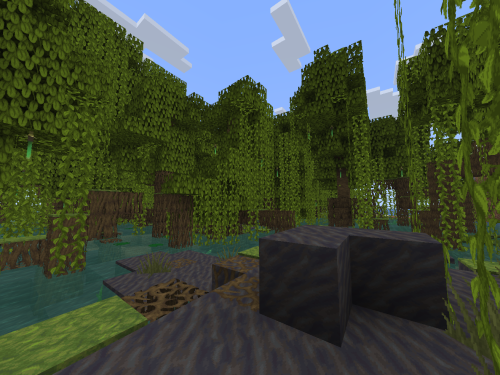
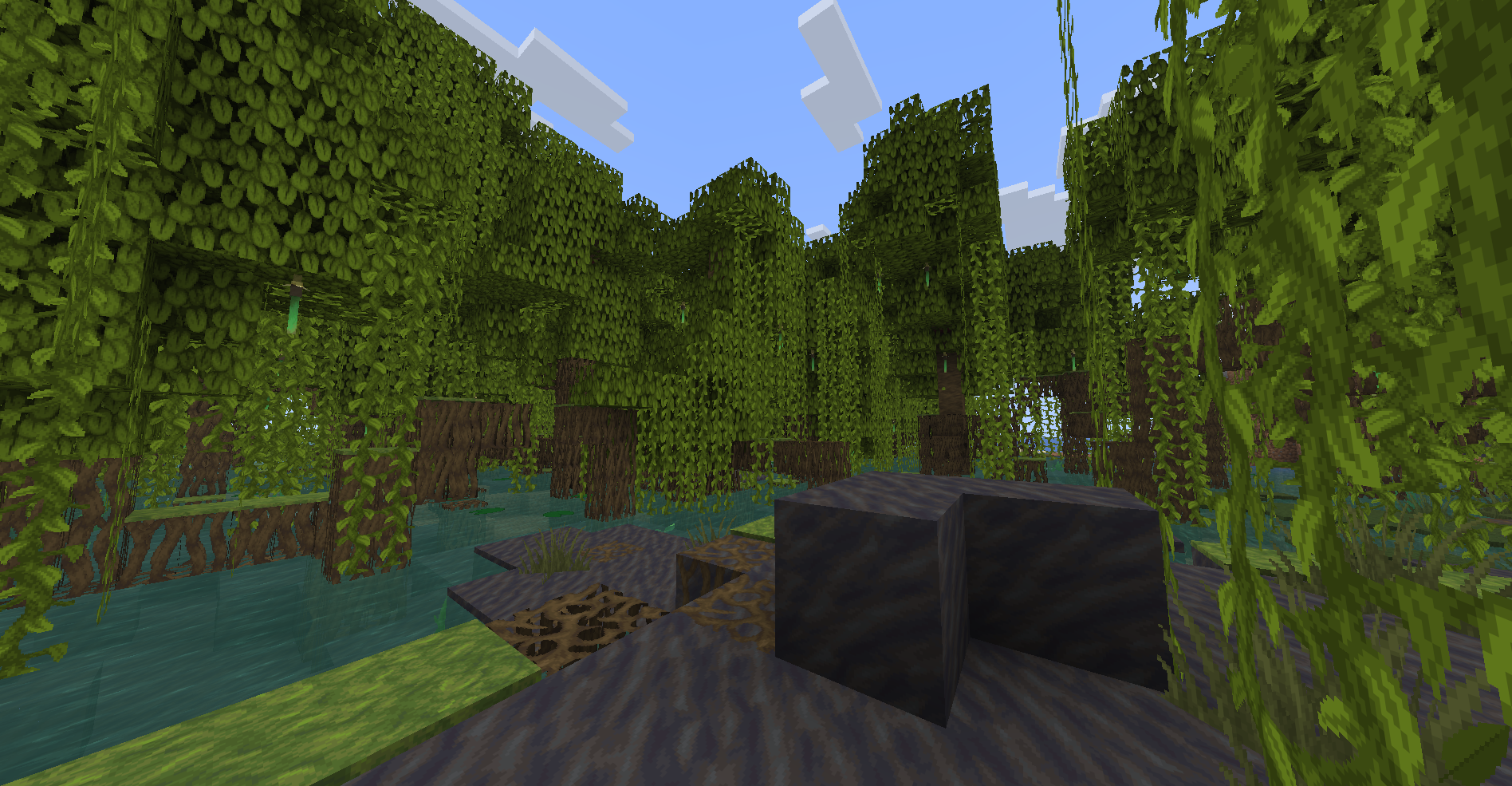
Mangrove swamps are warm, humid Overworld biomes filled with dense mangrove trees, sprawling roots, muddy ground, and patches of shallow water. Exploring them can involve weaving between roots, climbing over vegetation, and boating through open channels.
Their biggest attractions are renewable mangrove wood, abundant mud, and warm frogs. A single expedition can provide the beginnings of a tree farm, a new building palette, a renewable clay setup, and a frog habitat.
Life among the roots
Mobs of the Mangrove Swamp
Warm Frogs
The pale frogs native to mangrove swamps are the warm variant. Feed two adult frogs slimeballs to breed them. One will lay frogspawn on water, which eventually hatches into tadpoles.
Purpose: Frogs eat small slimes, which drop slimeballs, and small magma cubes, which produce froglights when eaten.
Slimes
Surface slimes can spawn at night when the height, lighting, and moon conditions are suitable. Full moons favor surface spawning; new moons prevent it.
Purpose: Slimeballs are useful for breeding frogs and crafting sticky pistons and slime blocks.
Bogged
These moss-covered skeletons can spawn in mangrove swamps and shoot poison arrows. Roots and uneven ground can make it difficult to approach them safely.
Purpose: They provide bones and arrows, with a chance of poison arrows when killed by a player. Bring a shield and use cover.
Bees
Some mangrove trees generate with bee nests. These give players a starting point for honey and honeycomb production.
Purpose: Honeycomb is used for beehives, candles, and waxing copper. Use smoke from a safely placed campfire below the nest when harvesting.
Tropical Fish
Watch the water for tropical fish. A water bucket lets you collect and transport a live fish.
Purpose: Create colorful aquariums or use buckets of tropical fish to breed axolotls.
Other Monsters
Ordinary hostile mobs can appear wherever their spawning conditions are met. Dense vegetation can make threats difficult to spot.
Explorer’s advice: Light your campsite and maintain a clear route back to safety.
Gather, grow, and build
Mangrove Blocks & Their Uses
Some of these materials occur naturally in the biome; others are crafted from what you gather there.
| Block or Material | How to Obtain It | What It Is Useful For |
|---|---|---|
| Mangrove Logs & Wood | Chop mangrove trees. Craft logs into wood blocks for bark on all faces. | Make planks, create structural beams, or strip them with an axe for a different building texture. |
| Mangrove Planks | Craft mangrove logs into planks. | A rich red building material for floors, walls, roofs, and furniture details. |
| Mangrove Building Parts | Craft from mangrove planks and related materials. | Stairs, slabs, fences, gates, doors, trapdoors, signs, buttons, pressure plates, and boats. |
| Mangrove Propagules | Harvest mature propagules hanging beneath mangrove leaves. | Grow new mangrove trees on suitable soil, including mud and clay. They can also be planted underwater. |
| Mangrove Leaves | Collect with shears or a Silk Touch tool. | Build hedges and canopies. Apply bone meal to leaves with room beneath them to begin growing a hanging propagule. |
| Mangrove Roots | Gather the exposed roots around mangrove trees. | Create tangled banks, submerged details, and natural-looking supports. They can be waterlogged. |
| Muddy Mangrove Roots | Gather naturally or craft from one mud and one mangrove roots block. | Add earthy root textures to foundations and shorelines. Unlike ordinary mangrove roots, they cannot be waterlogged. |
| Mud | Dig it from the swamp floor, or use a water bottle on dirt. | Craft packed mud and muddy roots, build muddy landscapes, or convert it into clay using pointed dripstone. |
| Packed Mud | Craft one mud with one wheat. | Use directly as an earthy building block or craft it into mud bricks. |
| Mud Bricks | Craft four packed mud into four mud bricks. | Build warm-toned masonry, including matching stairs, slabs, and walls. |
| Moss Carpet | Collect it from the tops of mangrove roots. | Add soft green ground cover to gardens, ruins, banks, and woodland builds. |
| Vines | Collect with shears. | Create hanging greenery and climbable surfaces. Vines also serve as a crafting ingredient for mossy blocks. |
| Bee Nests | Find them on some mangrove trees. Use Silk Touch if moving the nest. | Keep bees and harvest honey or honeycomb. Handle occupied nests carefully to avoid angering bees. |
Put your discoveries to work
Useful Crafting & Resource Routes
Make Packed Mud and Mud Bricks
- Gather mud from the swamp or make it with water bottles and dirt.
- Combine 1 mud + 1 wheat to obtain 1 packed mud.
- Arrange 4 packed mud in a square to obtain 4 mud bricks.
- Use mud bricks to make matching stairs, slabs, and walls.
This gives wheat an additional purpose and provides a renewable material for large building projects.
Turn Mud into Renewable Clay
- Place a solid support block.
- Attach pointed dripstone to the underside of that support.
- Place a mud block directly on top of the support.
- Wait for the mud to convert into clay.
Use the setup in the Overworld. Break clay for clay balls, then smelt those into bricks. Alternatively, smelt a clay block into terracotta.
Why it matters: You can produce more clay without continually digging up rivers and ponds.
Start a Renewable Mangrove Wood Supply
- Collect mature propagules from beneath mangrove leaves.
- Plant them on suitable ground with generous growing space.
- Allow them to grow naturally or use bone meal.
- Harvest the logs and collect more propagules for replanting.
Mangrove trees spread their roots and branches widely. Leave room around the planting area and check for overhead obstructions if a tree will not grow.
Small frogs, bright rewards
Frogs, Tadpoles & Froglights
Froglights are produced when a frog eats a small magma cube. They do not grow naturally in the mangrove swamp. Each frog variant produces a different froglight, and all three emit light level 15.
| Frog Variant | Example Growth Biome | Froglight |
|---|---|---|
| Warm — Pale | Mangrove Swamp | Pearlescent — Pinkish |
| Temperate — Orange | Plains | Ochre — Yellow |
| Cold — Green | Snowy Plains | Verdant — Green |
How to Get Different Frogs
- Breed two frogs using slimeballs.
- Wait for their frogspawn to hatch into tadpoles.
- Collect a tadpole using a water bucket.
- Release it into a safe pool in the desired biome.
- Let it mature there to obtain the corresponding frog variant.
For froglight production, use a contained feeding area and manage magma cubes carefully. Larger magma cubes are dangerous to both players and frogs.
Your next expedition
Leave with More Than Muddy Boots
Bring Home
- Mature mangrove propagules for replanting.
- Mangrove logs for a red wood palette.
- Roots and muddy roots for landscaping.
- Mud for packed mud, bricks, and clay production.
- Vines and leaves for decorative greenery.
- A bucketed tadpole from frogs you have bred.
Explore Smarter
- Mark your route through the dense vegetation.
- Use boats where the water channels are open.
- Carry a shield for encounters with Bogged.
- Bring shears for vines and leaves.
- Keep frogs and tadpoles in secure habitats.
- Replant propagules to maintain renewable supplies.
Need Help?
Use the in-game guide menu, ask in chat or Discord, or check the rest of the wiki.
Good next pages: