What Are Trial Chambers?
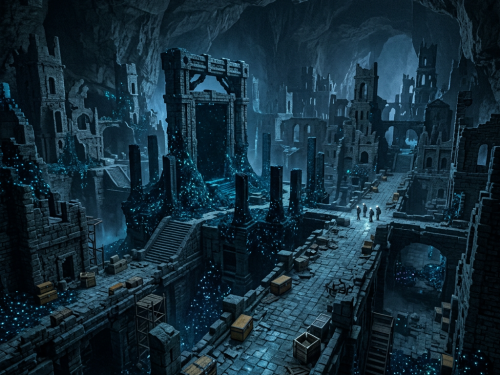
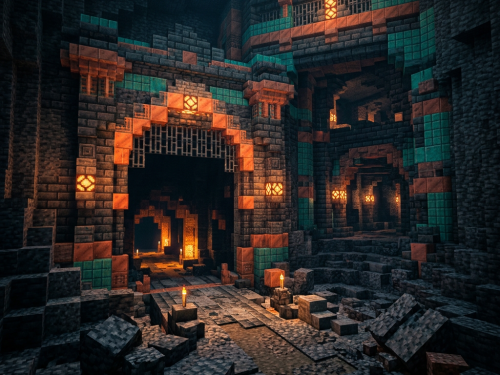
Trial chambers are sprawling underground structures built from copper and tuff. Unlike traditional Minecraft dungeons, they are designed as repeatable combat arenas: their trial spawners adjust to the number of nearby players, release a limited series of enemies, and dispense rewards when the fight is won.
Trial chambers were first revealed during Minecraft Live on October 15, 2023. Java Edition players received their first experimental version in Snapshot 23w45a on November 8, 2023. The finished structure was officially released for both Java and Bedrock Editions in the Tricky Trials Update on June 13, 2024.
This guide describes trial chambers as they function in Minecraft: Java Edition 26.1.2.
Where Do Trial Chambers Generate?
Trial chambers generate underground in the Overworld. Their starting height is randomly selected between Y=-40 and Y=-20, although individual rooms may extend above or below that range.
They can generate beneath nearly every ordinary Overworld biome, including oceans, beaches, plains, forests, deserts, jungles, badlands, mountains, swamps, mushroom fields, and cave biomes. They do not generate in the Nether, the End, or beneath the Deep Dark biome.
Because they are large and completely buried, trial chambers can be difficult to locate through ordinary mining. Their distinctive building materials—especially tuff bricks, copper grates, copper bulbs, and oxidized copper—make them easy to recognize once encountered.
How to Find a Trial Chamber
The most reliable method is a Trial Explorer Map.
A cartographer villager has an opportunity to offer a Trial Explorer Map after reaching the Journeyman level. The map marks a nearby trial chamber with the familiar structure icon used by other explorer maps.
You can also find a chamber by:
- Exploring large cave systems between approximately Y=-20 and Y=-40.
- Mining through areas containing unusual quantities of tuff or copper blocks.
- Using the
/locate structure minecraft:trial_chamberscommand if commands are available.
A Trial Explorer Map leads to the horizontal position of the structure, but the chamber is still underground. Once you reach the marker, dig down carefully. Do not mine straight down: chambers can contain tall rooms, pits, water, powder snow, and hostile mobs.
How Trial Chambers Are Built
Each chamber is assembled procedurally from a collection of corridors, intersections, atriums, combat rooms, traps, stairways, reward areas, and decorative spaces. Two chambers may share the same general architectural style without having the same exact layout.
The structures are primarily built from:
- Tuff
- Polished tuff
- Tuff bricks
- Chiseled tuff
- Copper blocks
- Cut copper
- Chiseled copper
- Copper grates
- Copper doors and trapdoors
- Copper bulbs
Their copper blocks generate at different stages of oxidation, giving the chambers their green, orange, and brown appearance.
Not every room contains a fight. Some contain supplies, traps, decorated pots, beds, barrels, dispensers, vaults, or architectural details. Look above and below the obvious route because balconies, ledges, hidden passages, and elevated ominous vaults are easy to miss.
Trial Spawners
A trial spawner resembles a monster spawner with decorated corners and glowing orange details. When it detects a Survival or Adventure-mode player with a clear line of sight, it activates and begins releasing enemies.
Unlike an ordinary monster spawner, a trial spawner:
- Produces a limited number of enemies.
- Adjusts its challenge when additional players join the encounter.
- Ignores Creative and Spectator-mode players.
- Can spawn enemies regardless of the surrounding light level.
- Only chooses spawn positions it can see.
- Keeps its summoned enemies persistent until they are defeated.
- Dispenses rewards after all its enemies are killed.
- Enters a 30-minute cooldown after the encounter.
The difficulty can increase when another player is detected, but it will not decrease simply because that player leaves. The increased challenge remains until the encounter ends and the spawner completes its cooldown.
Trial spawners cannot be collected with Silk Touch, moved with pistons, or destroyed for themselves as an item.
What Enemies Can Appear?
Most trial chambers select one enemy from each of three categories when the structure generates. Spawners belonging to that category will then use the selected enemy throughout the chamber.
Melee Enemies
- Zombie
- Husk
- Spider
Small Melee Enemies
- Baby zombie
- Cave spider
- Silverfish
- Slime
Ranged Enemies
- Skeleton
- Stray
- Bogged
The bogged is a moss-covered skeleton variant that fires poison arrows. A chamber containing bogged or cave spiders makes milk considerably more valuable.
Certain special spawners always summon breezes regardless of the chamber’s other enemy selections.
Fighting the Breeze
The breeze is a trial-chamber enemy that attacks with explosive bursts of wind. Its attacks can fling players and other creatures through the room, activate certain redstone components, and interact with buttons, levers, trapdoors, doors, bells, and copper bulbs.
Breezes move by making long, sudden jumps around their targets. They also deflect most projectiles, making ordinary bows and crossbows unreliable against them. The intended approach is close combat, although wind charges are an exception to their projectile defense.
When killed by a player, a breeze drops one or two breeze rods, with Looting increasing the possible number. Breeze rods can be:
- Crafted into wind charges.
- Combined with a heavy core to craft a mace.
- Used to repair a mace in an anvil.
- Used to duplicate the Flow Armor Trim Smithing Template.
- Used to brew Potions of Wind Charging.
Do not fight a breeze beside an open pit or dangerous trap unless you have secured the area. Its wind burst may do little direct damage but can throw you into a far worse position.
Completing a Normal Trial
Once the trial spawner has released its assigned waves, kill every enemy connected to that spawner. The spawner then ejects rewards for the participating players and enters its 30-minute cooldown.
Possible ordinary spawner rewards include:
- Trial keys
- Baked potatoes
- Bread
- Cooked chicken
- Potions of regeneration
- Potions of strength
- Emeralds
A trial key is not guaranteed from every completed spawner. Run several trials before assuming you have collected enough keys for every vault in the structure.
Vaults and Trial Keys
Standard vaults are marked by orange flames and require trial keys.
Hold a trial key and use it on the vault’s keyhole. The vault consumes the key and ejects a randomized selection of loot. The items rotating inside its cage show what the vault might contain, but the display does not determine the reward. Waiting for a desired item to appear will not improve your chances.
A vault can reward any number of different players, but each player may unlock that particular vault only once. This makes vaults suitable for multiplayer exploration: one player cannot permanently empty the reward for everyone else.
Orange particles flowing from you toward a vault indicate that you have not opened it before. A closed keyhole usually means that every nearby player has already claimed that vault.
Vaults do not reset for the same player. Trial spawners reset after 30 minutes; vault eligibility does not.
Standard Vault Rewards
Standard vaults can dispense useful supplies, equipment, valuables, and several exclusive collectibles.
Possible rewards include:
- Emeralds and emerald blocks
- Iron ingots
- Diamonds
- Golden carrots
- Honey bottles
- Arrows and tipped arrows
- Wind charges
- Ominous bottles
- Shields
- Bows and crossbows
- Iron and diamond axes
- Iron and diamond chestplates
- Enchanted books
- Golden apples
- Tridents
- Bolt Armor Trim Smithing Templates
- Guster Banner Patterns
- “Precipice” music discs
The rarest group of standard-vault rewards is rolled separately. A standard vault has a 25% chance to select one reward from this group:
- Golden Apple: 4 parts out of 12
- Bolt Armor Trim Smithing Template: 3 parts out of 12
- Guster Banner Pattern: 2 parts out of 12
- “Precipice” Music Disc: 2 parts out of 12
- Trident: 1 part out of 12
That makes the trident approximately a 2.08% result per standard-vault opening from this particular loot roll. Other loot is dispensed alongside the special roll.
Ominous Trials
Ominous trials are harder versions of normal trial-spawner encounters.
To begin one:
- Obtain an ominous bottle.
- Drink it to receive Bad Omen.
- Approach a trial spawner that is not already ominous.
- Bad Omen converts into Trial Omen.
- Nearby eligible trial spawners become ominous as you approach them.
Ominous bottles are dropped by raid captains defeated outside an active raid and can also appear in vault rewards.
Trial Omen lasts 15 minutes for each level of the consumed Bad Omen effect. Bad Omen I therefore produces 15 minutes of Trial Omen, while Bad Omen V produces 75 minutes. Milk can remove the effect if you decide not to continue.
An ordinary spawner that is already in cooldown can immediately convert to an ominous spawner if its previous encounter was not ominous. This allows you to complete a normal trial, drink an ominous bottle, and then challenge the same spawner ominously without waiting for the ordinary cooldown to finish.
What Makes an Ominous Trial Harder?
Ominous trial spawners glow blue and burn with soul flames.
Enemies capable of wearing equipment may appear with armor and enchanted weapons. Their armor can carry Protection IV, Projectile Protection IV, and Fire Protection IV, while swords may have Sharpness or Knockback and bows may have Power or Punch.
Creatures that cannot use equipment may instead appear in greater numbers.
The spawner also creates hazards above players and mobs. Depending on the room, these can include:
- Arrows
- Fire charges
- Wind charges
- Lingering potions
- Potions with Infested, Oozing, Weaving, or Wind Charged effects
Watch the ceiling and listen for the spawning sound. Remaining in one place during an ominous encounter makes it much easier for the spawner to drop a projectile or potion directly onto you.
When the encounter is completed, an ominous trial spawner has a 30% chance to dispense an ominous trial key.
Ominous Vaults
Ominous vaults have a darker appearance, blue-green details, and soul flames. They are less common than standard vaults and are frequently positioned in places that require climbing, careful searching, or the use of wind charges.
Only an ominous trial key can open an ominous vault.
As with standard vaults, each player can open each ominous vault only once. Completing the trial spawner again does not restore an already-used vault for that player.
Ominous Vault Rewards
Ominous vaults contain upgraded equipment and some of the chamber’s most desirable exclusive items.
Possible rewards include:
- Emeralds and emerald blocks
- Iron blocks
- Diamonds and diamond blocks
- Golden apples
- Enchanted golden apples
- Wind charges
- Tipped arrows
- Ominous bottles
- Enchanted crossbows
- Enchanted diamond axes
- Enchanted diamond chestplates
- Enchanted books
- Flow Armor Trim Smithing Templates
- Flow Banner Patterns
- “Creator” music discs
- Heavy cores
An ominous vault has a 75% chance to select one reward from its unique group:
- Enchanted Golden Apple: 3 parts out of 10
- Flow Armor Trim Smithing Template: 3 parts out of 10
- Flow Banner Pattern: 2 parts out of 10
- “Creator” Music Disc: 1 part out of 10
- Heavy Core: 1 part out of 10
The heavy core therefore has a 7.5% chance per ominous-vault opening. It is not guaranteed, and repeatedly completing trial spawners will not let the same player reopen the same vault. If you do not find a heavy core, you must locate another unused ominous vault—usually in another trial chamber.
Combine one heavy core with one breeze rod in a crafting grid to make a mace. The heavy core cannot be obtained from ordinary vaults.
Chests, Barrels, Dispensers, and Decorated Pots
Vaults hold the headline rewards, but they are not the chamber’s only loot source.
Supply chests may contain:
- Food
- Torches
- Arrows
- Tipped arrows
- Potions
- Milk buckets
- Stone pickaxes
- Wooden planks
- Tuff
- Moss blocks
- Glow berries
- Bone meal
Other chests and barrels can contain iron or diamond tools, diamonds, blocks of iron, blocks of emerald, blocks of diamond, ender pearls, scaffolding, honeycomb, compasses, buckets, cakes, and building materials.
Decorated pots are particularly important. Trial-chamber pots may display and drop the Flow, Guster, or Scrape Pottery Sherd. They can also rarely contain the “Creator (Music Box)” music disc.
Break pots with a tool if you want to recover their contents and any patterned sherds. A Silk Touch tool instead preserves a decorated pot as a block, so do not use Silk Touch if your objective is to obtain the individual sherds.
Blocks Worth Collecting
Trial chambers are also an excellent source of decorative blocks, including:
- Copper grates
- Copper bulbs
- Copper doors
- Copper trapdoors
- Chiseled copper
- Cut copper and its variants
- Tuff bricks
- Polished tuff
- Chiseled tuff
- Tuff stairs, slabs, and walls
Copper bulbs are redstone-controlled light sources. Their brightness depends on their oxidation level: less-oxidized bulbs produce more light. They toggle their current state when they receive a redstone pulse rather than remaining lit only while powered.
The trial spawners and vaults themselves cannot be recovered in Survival mode.
Preparing for a Trial Chamber
Trial chambers are intended as a mid-game combat challenge. Iron armor is workable, but enchanted armor and a shield make the experience much safer.
Recommended supplies include:
- Well-maintained armor
- A sword for breezes and close combat
- A bow or crossbow for skeletons, strays, and bogged
- A shield
- Plenty of food
- Torches or other markers
- Milk buckets
- A water bucket
- Blocks or scaffolding
- A pickaxe
- An axe
- Spare weapons
- Potions of healing or regeneration
- Ender pearls
- A bed placed safely outside the structure
Milk is especially useful against poison from bogged or cave spiders and against unwanted Trial Omen. Remember that drinking milk removes all active status effects, including beneficial ones.
Bring an inventory-management solution if possible. Trial chambers produce a messy mixture of food, blocks, arrows, potions, equipment, sherds, templates, keys, and valuables.
Combat Strategies
Control the Room Before Activating the Spawner
Do not rush directly toward every trial spawner. Inspect the chamber first. Block dangerous drops, identify dispensers, create an escape route, and remove unrelated enemies before allowing the trial to begin.
Watch the Spawner’s Display
The miniature creature visible inside a trial spawner identifies what it will summon. This gives you a chance to prepare milk for poison enemies, a shield for skeletons, or a sword for breezes.
Keep Line of Sight in Mind
A trial spawner needs valid visible positions to release its enemies. Fighting around corners can reduce the number of convenient spawn locations, but hiding indefinitely will not complete the trial. The spawned mobs are persistent and must be killed.
Separate Enemy Groups
Narrow corridors can be safer than open rooms when fighting zombies or spiders. Large rooms are generally better for breezes because they give you space to avoid being thrown into walls or pits.
Do Not Depend Entirely on a Shield
Shields are excellent against skeletons and many direct attacks, but they do not solve every hazard. Poison, lingering potions, wind bursts, spiders, slimes, and attacks from multiple directions can still overwhelm a stationary player.
Stay Mobile During Ominous Trials
Ominous spawners drop projectiles and potions above nearby targets. Move unpredictably and avoid remaining beneath low ceilings where you cannot see the incoming hazard.
Use Milk Carefully
Milk can remove poison, Infested, Weaving, Oozing, Wind Charged, and Trial Omen, but it also removes Strength, Regeneration, Resistance, and other useful effects. Drink it when the harmful effect is more dangerous than losing your buffs.
Mark Cleared Areas
Because chambers are procedurally assembled and visually repetitive, it is easy to revisit the same room. Place torches consistently on one side, use temporary blocks, or place signs to mark cleared spawners and opened vaults.
Search Vertically
Ominous vaults are deliberately placed in harder-to-reach positions. Check high ledges, upper galleries, side chambers, stairwells, and areas accessible with wind charges. Do not assume the chamber is exhausted merely because the main corridors are clear.
Solo or Group Play?
Trial chambers can be completed alone, but the spawners are specifically designed to support groups. Additional detected players increase the number of enemies and rewards.
A larger party therefore does not simply trivialize the structure. More players provide more combat power, but the trial spawner responds by increasing the encounter’s challenge. Every eligible player can also use a separate key on each vault and receive an individual reward.
In a group:
- Enter rooms together so the spawner accurately registers the party.
- Assign one player to watch for dropped ominous hazards.
- Share milk, food, and spare equipment.
- Confirm that everyone has opened each vault before leaving.
- Avoid activating several nearby spawners simultaneously unless the party is prepared.
Can Trial Chambers Be Repeated?
Trial-spawner battles can be repeated after their 30-minute cooldowns. Normal spawners can also be converted into ominous spawners under the correct conditions.
The structure’s containers work differently:
- Trial spawners reset after their cooldown.
- Ordinary chests, barrels, dispensers, and decorated pots do not naturally refill.
- Each vault can be opened once by each player.
- Each ominous vault can be opened once by each player.
- A new player may still open a vault that previous players have already used.
- The same player must find another vault for another chance at its unique rewards.
This distinction is important. Trial chambers provide repeatable combat and renewable spawner rewards, but they do not provide unlimited heavy cores, armor trims, music discs, or other vault-exclusive treasures from one location.
Trial-Chamber Advancements
Several advancements are connected to trial chambers and their rewards:
- Minecraft: Trial(s) Edition — Enter a trial chamber.
- Under Lock & Key — Unlock a vault with a trial key.
- Revaulting — Unlock an ominous vault with an ominous trial key.
- Blowback — Kill a breeze with a deflected wind charge.
- Who Needs Rockets? — Use a wind charge to launch yourself upward by at least eight blocks.
- Over-Overkill — Deal 50 hearts of damage with a single mace strike.
The last two reward creative use of the chamber’s wind-charge and mace mechanics, while Blowback is one of the more technical combat challenges in the update.
Final Checklist
Before leaving a trial chamber, make sure you have:
- Defeated every trial spawner you want to complete.
- Checked for unclaimed standard vaults.
- Searched upper levels for ominous vaults.
- Broken the decorated pots you want to loot.
- Examined chests and barrels in side rooms.
- Collected breeze rods.
- Retrieved dropped keys before they despawn.
- Marked the chamber’s coordinates.
- Recorded which vaults you have already opened.
- Preserved an ominous bottle if you intend to return.
Trial chambers are more than one-time dungeons. Their ordinary encounters can be replayed, their ominous versions provide a voluntary increase in difficulty, and their vaults give every adventurer an individual chance at valuable rewards. A fully explored chamber offers combat, building blocks, collectibles, advancements, unique equipment, and the materials needed to create one of Minecraft’s most unusual weapons.
Need Help?
Most of the information in this guide is applicable to
vanilla Minecraft – Java 26.1.2.
However, this guide was made specifically for
Blockhead Odyssey SMP – mc.BlockheadOdyssey.com
For more assistance, join us on Discord or explore our other guides!
Good next pages: